The Farm*Homestead*Garden Blog

All things farm, garden, homestead related from the Catsndogs4us family.

Our life on a wild, woodland homestead.

Saturday, February 15, 2020

Review- Harris Farms 6.25 gallon plastic poultry drinker when used with heated metal base

Our winters are harsh some years the temperature gets well below 0 F so we need to use heated water sources for the chickens and ducks. In the past we have used galvanised metal poultry drinkers with the heated metal base in winter. Having become frustrated with how fast the galvanised drinkers rust, typically 1 year, I decided to try the Harris Farms plastic drinker which claims that even though it's plastic it can be used with your existing metal heated base. (This applies only to the model pictured below not all of their plastic drinkers are safe to use with a heated base.) Oh and why do the metal drinkers rust for us? A company rep. responded when I asked that very question and said it's likely due to well water, the drinkers will rust faster with well water that "city water". That seems like a problem they should address since most farms are on well water I would guess! So anyway we have been using the plastic drinker since fall.


I can say that this drinker does work with the heated metal base that we have used for several years (with a metal drinker). It has not melted or caused any issues at all. There is a point at which this drinker will freeze up though, where the metal drinkers did not. The plastic does not conduct the heat as well as metal so when we get below 20 degrees F there is sometimes freezing on the rim and within the drinker. When the temps fall below 10F the drinker will freeze more and below 0 F if the temperature stays that low for many hours the drinker  can completely freeze up. One work around there is to add hot water to help it along.

This morning when I started the birds day it was -2 F and this is what the plastic drinker looked like.

A layer of heavy frost around the rim of the drinking area. But the water was not fully frozen.


The water inside the drinker appears to be frozen.
 When poking through the ice with a stick I find that the ice is only frozen to about 1/2 inch or so. 

I added some warm water to top it up and this helped the frozen water to defrost. 


Issues - The water can freeze at times,  the inside of the drinker does get algae fairly quickly and the drinking area is hard to keep clean. The lip is very wide which means just scrubbing then dumping the drinking area can result is a lot of water pouring out from the tank.  One more issue that we did not have with a metal drinker is that heavier freezing occurs when the drinker is filled to the top on below 20 F days/nights. Keeping it half full so the water level is closer to the heater at the bottom helps keep down the freezing. When I have the drinker full to the top it will freeze several inches down and the quick fix of poking a hole in the ice with a stick will not work at all! 

Benefits- The plus side is that this is working to keep the water unfrozen most of the time and it won't rust. Algae washes away easily from the plastic and the drinking area can be cleaned, though the entire drinker needs to be emptied to do so. The metal heating base has not in any way melted or damaged the plastic drinker. 

Comparison:
Galvanised metal drinker- 
Pro's- the water never froze when used with a heated base. Easy to keep clean. No algae problems.
Con's- the drinker rusts after about a year when using our well water.  The drinker will also rust quickly if apple cider vinegar is added to the water as a treatment or preventative. Rust is not safe for birds so a new drinker at around $40 needs to be purchased each year.

Harris Farms plastic drinker (the model meant for use with a heated base, not all are)-
Pro's- Will never rust, can keep water unfrozen at most temps as long as it's not fully filled. Should be a one time purchase at around $40. Can be used with heated base.
Con's- Algae growth even in winter, harder to clean, can't use the full 6.25 gallons capacity or more freezing will occur, limited to about half that capacity. 

Other water sources we use, we do use rubber dishes for additional water for the ducks the con is the freeze up quickly, the pro is that you can knock the ice out of them. These are great for ducks but they do use the heated drinker with the chickens as well. 

I'd say the plastic drinker wins when the question of value for cost is considered though it is more work. Next winter I hope to try an Aluminum drinker that shouldn't rust like the galvanised does. Stainless steel would be even better but I haven't seen one for sale yet. 

Thursday, February 13, 2020

But don't ducks need lots of unfrozen water....Ducks for cold climates

One question I'm asked often when people find out we have ducks is - don't they need lakes and ponds even in winter? That's a fair question considering we mostly see wild ducks on the water in summer. The answer is in short no, most farm ducks do not need water for swimming in winter. Most duck breeds that people keep on farms and homesteads are considered land ducks. Sure they enjoy a good swim but they don't need it and they are very happy on dry land, playing in mud and playing in snow. Our ducks love fresh fallen snow!

A snowy morning in New Hampshire.

Ducks do need a regular source of water like most living things but just enough for drinking and digesting food. Clean fresh water given a few times through the day on very cold days or given in a heater water container so it doesn't freeze up is all land ducks need in winter.

On a snowy day ducks come out to play, while in the coop the chickens stay!

The duck breeds we have here are a mix of Khaki Campbell, Rouen, Cayuga and Black Swedish. All of these are suitable for northern winters, they not only survive but they thrive. Our flock is getting older and laying is slowing down some but young ducks will often lay right through the winter when chickens are taking a break.

Hooray For Snow!


Monday, October 14, 2019

Getting the birds and bunnies ready for winter

Time to get the birds and buns, that is the chickens ducks and rabbits ready for winter. I gave the coop a full cleaning, moved in the cage the rabbits stay in during the worst of winter, spruced up the covered run area and added in various boredom busters. I did not roll down the plastic side wraps since it seems just a bit too early and that doesn't take long. I'll leave that for a couple more weeks unless we get snow in the forecast.  The chickens always love  a clean coop and clean nest boxes and they also love new bags of shavings or bales of hay. Anything cozy they love!


First frosts how did the gardens fare? And super late surprise peaches!

We've had two frosts so far this autumn. The first about 2 weeks ago, didn't do any damage to the vegetable gardens. The second frost, which was last week did kill some plants but not all. The affected plants were all summer squashes, bean plants , cucumber plants and some tomato plants. Most flowers are still fine as well as greens, beets, some beans,  a couple winter squash/pumpkin plants, some tomatoes, peppers and the few potato plants still in the ground. One surprising survivor is another peach tree which is looking set to bear ripe fruit soon! I really did not think this tree would give us anything because it still had tiny green peaches a couple weeks ago. I pulled some off to see if that would help and the remainder are looking to be nearly ripe now. What a treat that will be to have fresh peaches when it's very nearly winter for us. I brought 6 in the house to ripen but taking a chance to leave the majority on the tree and reassess day by day. As for our GIANT pumpkin plant, it topped out at about 50 feet long! It grew us 5 nice pumpkins which now decorate the front walk area. A few more pumpkins are coming along on another plant.


Some plants succumbed to our first freezes.


While others are still growing strong


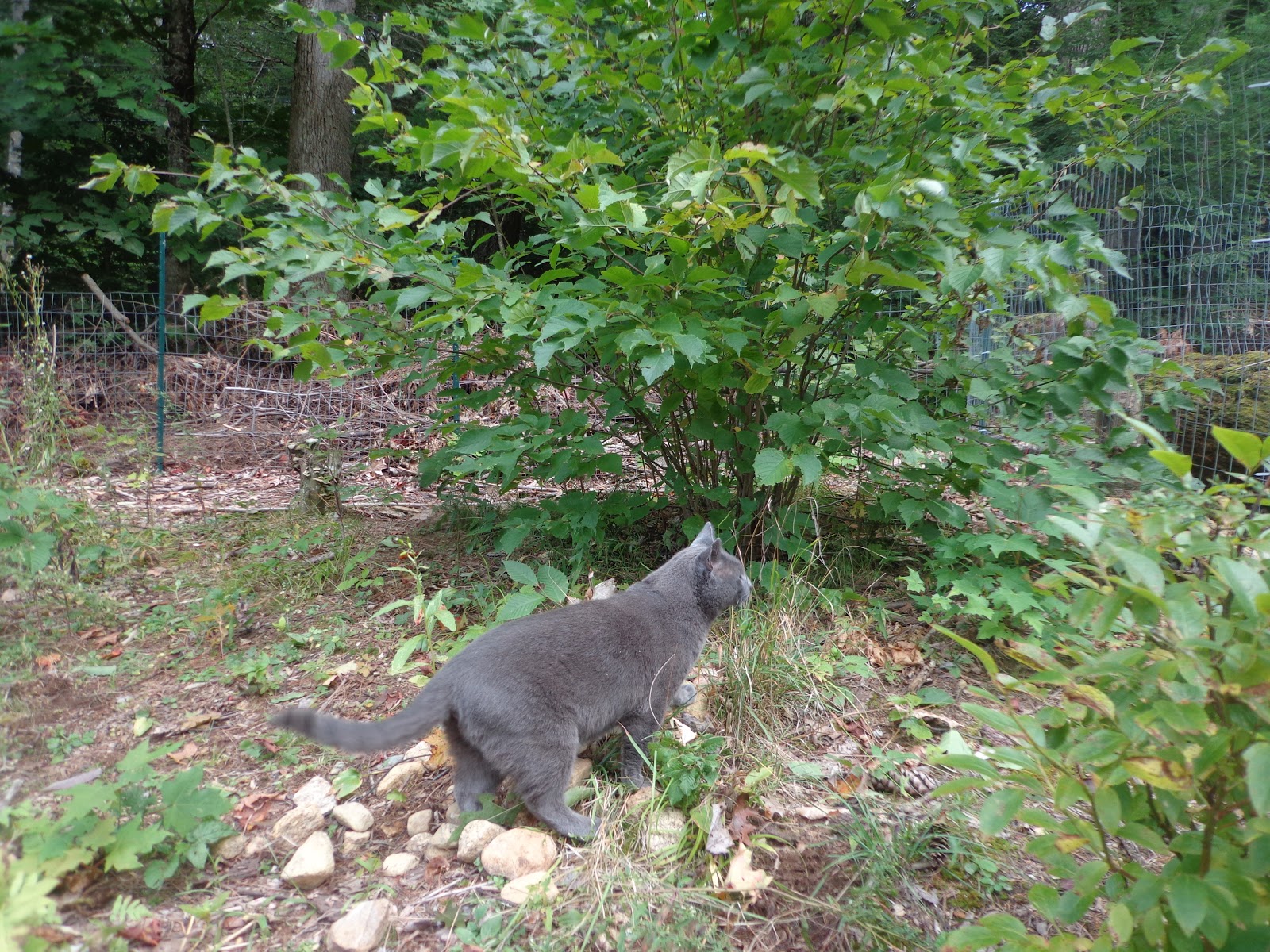
KitKat is always a great help and entertainment when working the gardens.


And some surprise  very late peaches are nearly ripe! This is our Reliance peach tree and this is its first year bearing fruit.


Hazelnuts and Walnuts

Out two hazelnut bushes produced well this year and I beat the squirrels to the nuts! I think deer have also taken the nuts in the past so the fact that the hazelnut bushes are now fenced in helps with that. I harvested about a month ago. Left the nuts to dry out in a warm dry place for a few weeks and then when I saw that some nuts were falling free from their pods I knew they were cured and I could remove all the nuts from their coverings. It seems like a lot of work for just a few pounds of small nuts but they are organic and from our own bushes. Can't do much better than that. We may add more hazelnut bushes next year.

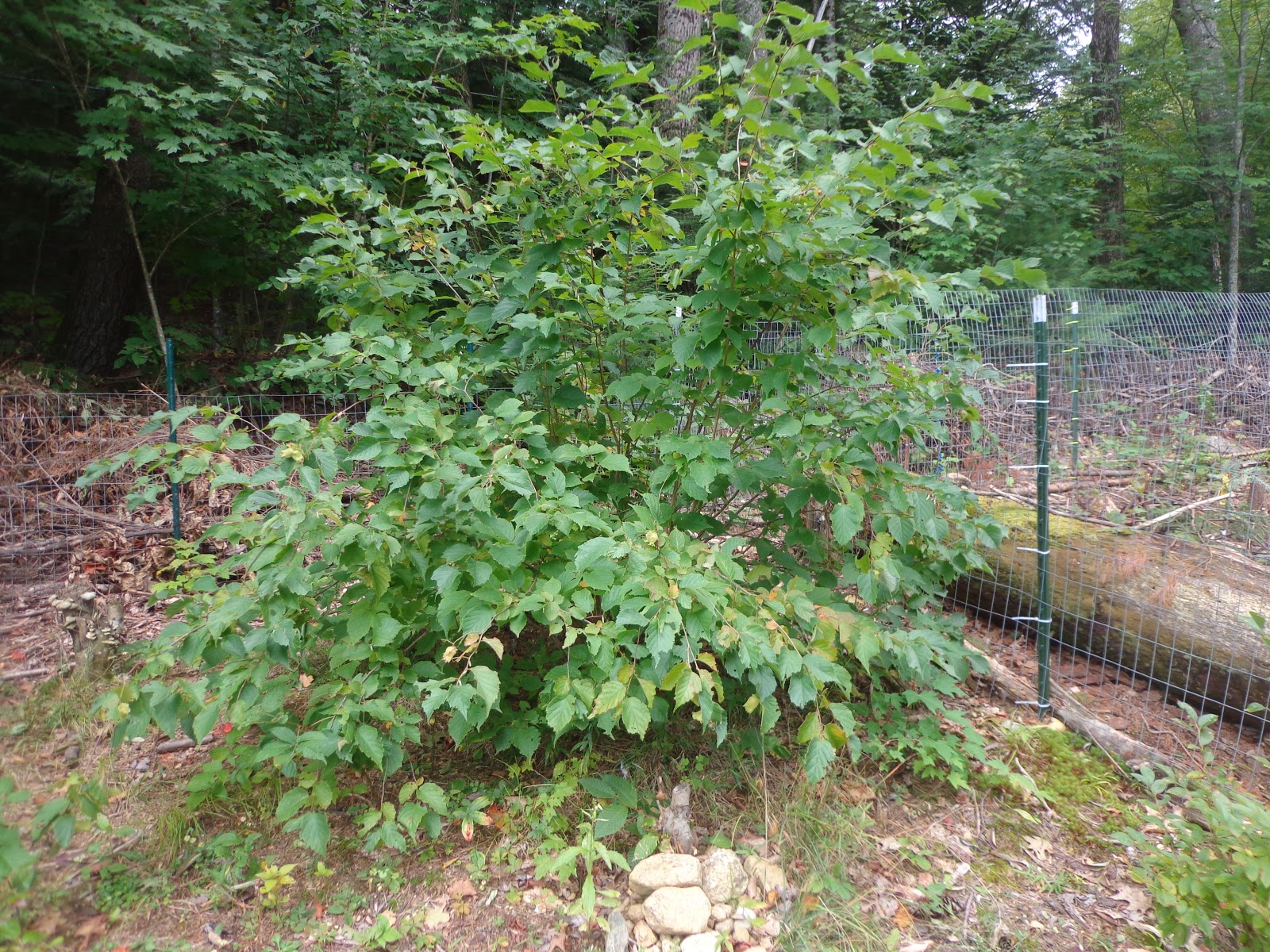
Hazelnut bush. I believe it's 4 years old, they grow fast.

Hazelnuts ready to harvest.

I harvest as late as possible but before they are fully ripe so as to beat the wildlife.

KitKat of course helps.

A few weeks later the hazelnuts are dried out and ready for husking and eating.

many nuts had fallen right out of their husks but some needed taking out.

Most de-hulled now. 

The hazelnuts look like toys to Linnea!


Walnuts on the other hand...our harvest was not so big...three nuts. Haha. BUT this is the first year we got nuts from our two English Walnut trees so this was very exciting indeed! Hopefully the trees will continue to have good growth and many more walnuts will grow next year. The trees are only a few years old so this is pretty good. The walnut I tasted was delicious. The English Walnut trees are a bit away from other gardens and trees since their roots can produce a substance that can cause other plants to fail. The walnut trees could be accessed by wildlife but nothing found our tiny crop of walnuts this year. Having said that I believe their were FIVE little nuts at the start so maybe two were taken early on. More likely they dropped off the trees very early. One walnut fell off the tree a couple weeks ago and I found it. Then the last two we waited until the were starting to go just a bit brown.


Walnut tree approx. 3 years old. 

A walnut about ready to harvest

One of the English Walnut trees. 

Two walnuts.

I tried one, it was very  good!
Another nut tree we could try planting would be chestnuts either a hybrid or Chinese. There have supposedly been American chestnut trees on our road that hadn't yet succumbed to the great chestnut blight. At times I have looked in our woods to see if I can spot one but I have never found one. I have found beechnut trees but the wildlife always beats me to those nuts and they are so tiny not worth the effort.

That is our nut harvest for this year done.